

Recipes are rarely original creations; instead, they often reflect generations of eager chefs building on the knowledge established by those who came before. While dishes slowly evolve, the fingerprints of their past still linger well into modern times. To better understand how history leaves it mark, I traced some of the adaptations of my lemon-caper pork chops as far back as I could to see where certain aspects of the dish originated.
One of the earliest renditions of this dish that I could find was published in the 1824 book “The Virginia Housewife: or Methodical Cook by Mrs. Mary Randolph.” In it, Randolph prepares the pork chop with a breading made of “pepper, salt, pounded nutmeg and chopped parsley,” after which it is fried in lard, then stewed in a gravy with lemon pickle, and finally garnished with lemon slices, which is remarkably similar to this modern recipe. However, even this historic dish hints at an even more ancient continuity, as enslaved Black cooks likely introduced the use of lemon pickle, a staple in many North African dishes. While Randolph does not credit those cooks in her writing, it is clear their influence still echoes, as lemon is one of the most crucial elements of today’s recipe.
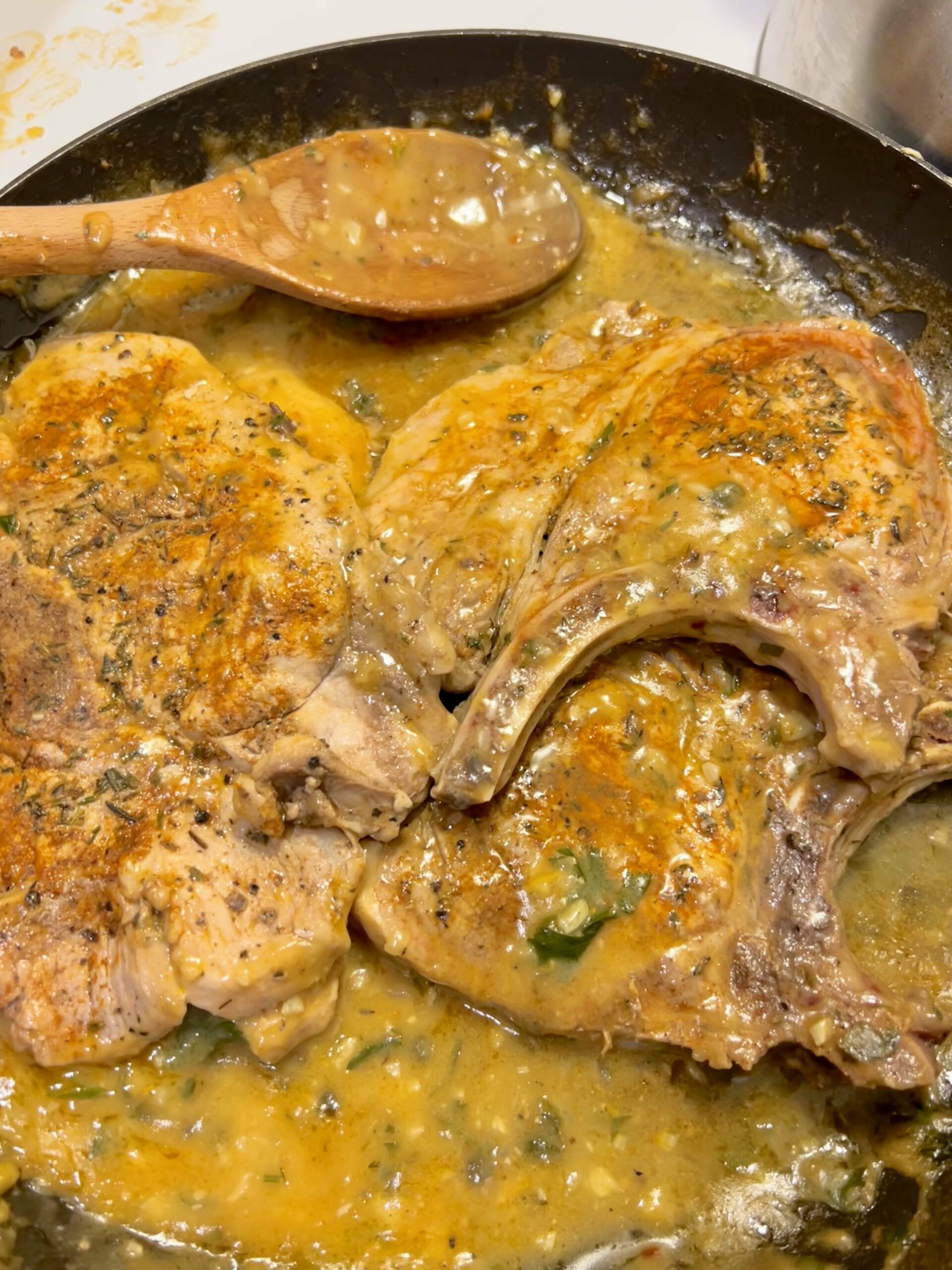
The modern version of this recipe, detailed below, builds off this history while still giving it a fresh contemporary twist. The juicy, thick-cut pork chops are seared until brown, then simmered in a velvety, lemon-and-caper-studded gravy. The piment d’Espelette is a tremendous addition to the original, as the ground Basque pepper adds a subtle pop of color and a pungent tingle of heat that sits comfortably between the rich gravy and invigorating tang of the lemon. The herbaceous aroma of the parsley throughout the dish helps to ground the flavors without detracting from the character of every bite. Each element of the dish honors its past while still pushing it into new territories. The zip of the lemon pickle is still preserved in the form of fresh lemon zest and juice. However, the story of this recipe did not end with The Virginia Housewife, as many chefs continued to echo the methods she wrote about long after her book was published.
More than 150 years later, in his 1978 New Orleans cookbook, Chef Nathaniel Burton includes a version of pork chops with a strikingly familiar technique: flour the chops, fry them in fat, then let them slowly stew in a rich gravy. It was this throughline of gravy-stewed chops that Chef Toni Tipton-Martin highlighted to create in her version of the dish, an elegant mix of zesty lemon and savory butter: the lemon-caper pork chop. It was her interpretation of this classic dish, published in The New York Times, that my mom discovered and passed on to me.
The recipe in this article is essentially a translation of my mom’s version of Tipton-Martin’s dish, in which I carefully formalize her confident disregard for specific measurements — a technique learned from many years of cooking. However, even between our recipes, the dish has undergone a slight shift. I prefer to use thick-cut pork chops as they leave a wonderfully flavorful layer of fat in the skillet, which can be used to make a thicker and more decadent gravy.
To this point, while writing this article, I asked my mom about her thoughts on the importance of crediting a recipe’s predecessors. Like most moms, she answered my question with another question: “When do you need to give credit to the person before you?”
This article only begins to scratch the surface of the generations of cooks who have contributed to shaping this dish; it highlights the significant role that history plays in every plate of food, especially here in the South, where much of our culinary culture came from uncredited Black slaves who infused their culture into this region through cooking. So while you enjoy these delicious pork chops, try to keep in mind how many hands across history guided this dish and how many might change it along the way.
_______________________________________________________________________
Recipe:
Ingredients / Tools
4 thick bone-in pork chops
Kosher Salt and freshly cracked black pepper, to taste
½ teaspoon of dried thyme leaves
½ teaspoon of smoked paprika
1 ½ tablespoons of olive or avocado oil
½ stick of butter
1 shallot, minced
3 garlic cloves, minced
1 tablespoon all-purpose flour
2 cups of chicken broth
1 tablespoon drained capers
3 tablespoons of fresh parsley, minced
2 teaspoons of freshly grated lemon zest, plus two tablespoons of juice
Tools:
Large skillet, wooden spoon, aluminum foil, garlic press, chopping knife, lemon zester/grater with small holes.
Directions
Step One:
In a large skillet, heat olive or avocado oil on medium heat until it begins to shimmer.
Step Two:
Dry off your pork chops with a paper towel. Then thoroughly season both sides with salt, pepper, thyme, and smoked paprika. Add the chops to the hot oil and cook until browned, which should take about 3-5 minutes per side, depending on the thickness of the pork chops. Transfer the chops to a plate and cover them in aluminum foil to keep them warm. Leave the fat from the chops in the skillet.
Step Three:
Melt 2 tablespoons of butter in the skillet, and when it begins to foam, add the minced shallot and garlic. Sauté until soft. Sprinkle in the flour and allow it to cook into the aromatics for about 2 minutes, stirring constantly. Whisk in the chicken broth, and raise the heat to high. Bring the liquid to a boil, scraping the bottom of the skillet. Cook until reduced, about 7-10 minutes.
Step Four:
Stir in the capers, parsley, lemon zest, and juice. Simmer for 1-2 minutes, then add the remaining butter. Stir until the butter incorporates and the sauce is smooth. Add the pork chops back into the sauce and allow them to warm up. Serve chops with some gravy on top. Garnish with parsley.