

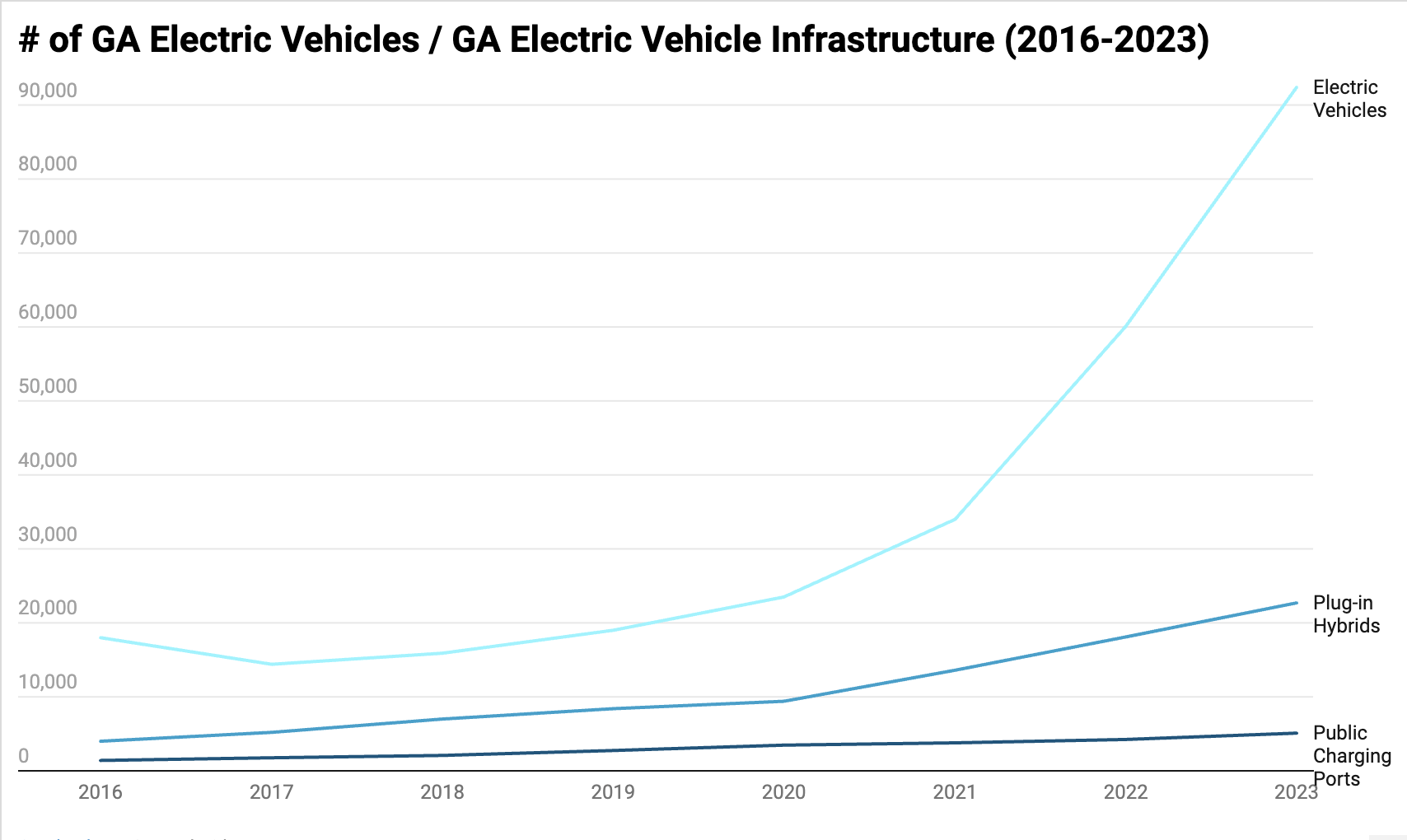
While the number of electric vehicles in the state of Georgia has continued to increase rapidly since 2021, the charging infrastructure required to support statewide travel has stalled. In just two years, from 2021 to 2023, the number of EVs in the state nearly tripled from 34,000 to more than 92,000, whereas publicly available charging ports only grew by just over 1,300.
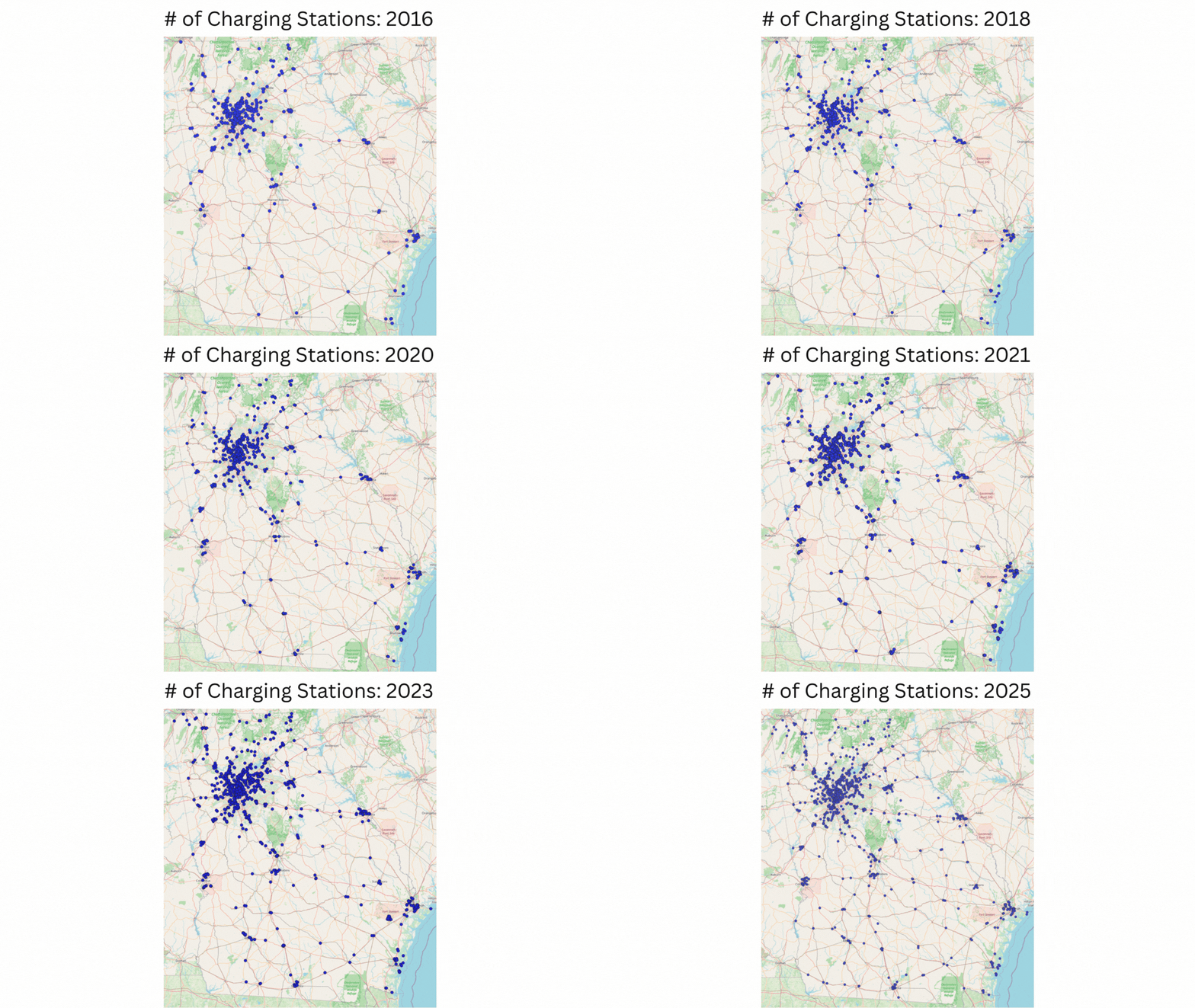
Map showing all Georgia charging locations from 2016 to 2025. Source: Alternative Fuels Data Center / Graphic: Parker McCollum
EV charging can be broken down into three types: Level 1 charging, which takes an estimated 22 to 40 hours to fully charge a battery, Level 2 charging, which takes an estimated 5 to 6 hours, and DC fast charging, which can fully charge in an estimated 20 to 45 minutes. While DC fast charging is widely considered the most impactful to install, it is also the most expensive, costing between $58,000 and $150,000 per plug depending on its output.
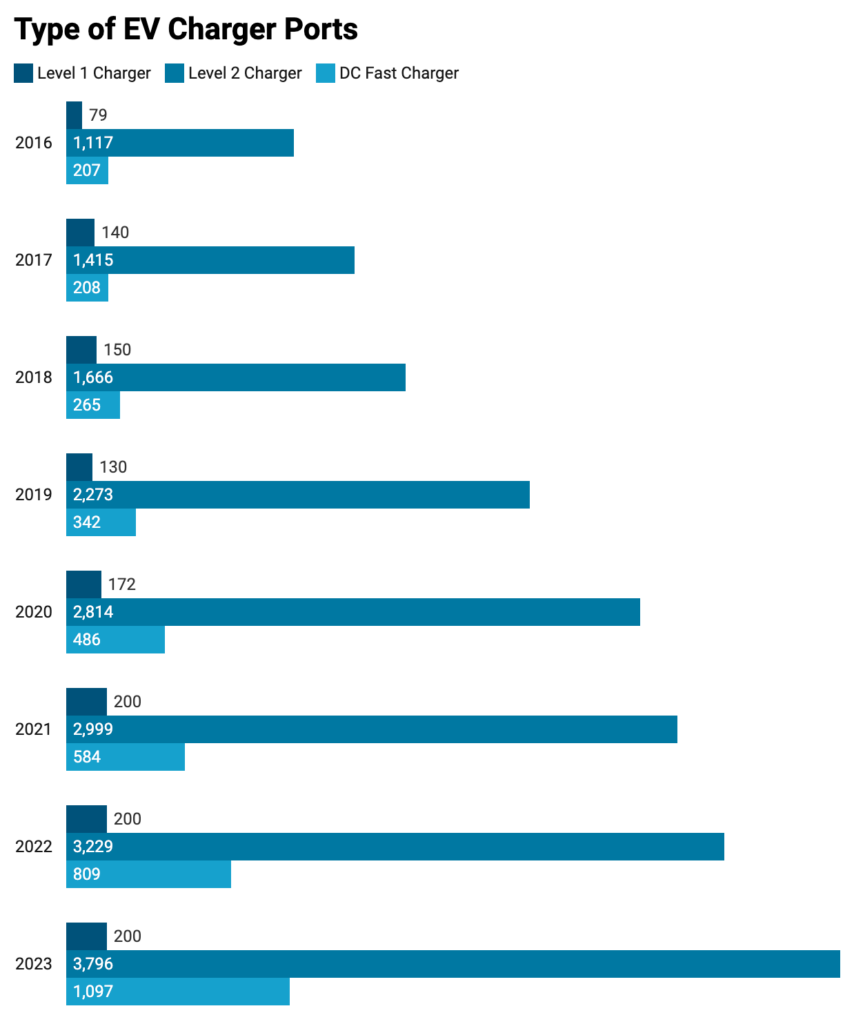
Graph depicting all charger types in the state of Georgia from 2016 to 2023. There are three types of chargers, ranging in speed of charge, starting with Level 1, followed by Level 2, and culminating in DC Fast. Source: Alternative Fuels Data Center
While the cost of installing chargers can be a limiting factor, it is not the only obstacle to overcome. “So cost is one thing. Grid connections is another big challenge, and hand in hand with getting power to a new site is being able to get that site permitted and approved by the local authority having jurisdiction,” according to Eric Woods, a researcher at the National Renewable Energy Laboratory, “There’s stories out there today of some sites being quoted two to three years by their electric utility in order to bring one or two megawatts to a location for a fast charge station.”
These delays can be very impactful for EV drivers who don’t have home chargers. “I would say you definitely need a home charger because back home. I don’t have one, and I was there for like three months, and I was like struggling to find a charger,” said Kayla Castro. Kayla posts videos online of road trips in her Tesla and has had several close calls trying to find chargers. “I feel like there needs to be a lot more. There’s been a few times where, like I barely make it just cause they’re like so far apart.”
With the demand for EVs steadily increasing, it has become more critical than ever to expand the infrastructure required to support more battery-powered cars across the state of Georgia, especially in rural areas and along major roads such as highways and interstates.